


The Sound of music

Electric, charged vibrations all around. Filling up the air and allowing you to breathe… breathe like
you’ve never breathed before. Breath like… The first gasp after being held under too long. Like
the first inhale of cold morning air that shocks your lungs awake. It moves through you. It hums in
your ribs. It settles in your spine. It asks nothing of you, except to feel.
It allows you to be a part of something bigger than yourself and bigger than you ever thought you
could be. A current you step into. A tide that carries you so far out you forgot what the touch of
land even feels like. Allowing yourself to truly be free. Free inside of a moment, inside of the ever-
complex version of yourself that never gives you a second to simply exist. The mind that races,
the doubts that chatter, the expectations that cling to your shoulders, all of it dissolves into
rhythm.

When you listen to music… really listen to music, you can live there, in that space. Even just for a
moment. You can set down the narrative. You can let the beat decide your pulse and the melody
decide your mood. For three minutes, or five, or seven, you are not the accumulation of your
responsibilities. You are vibration. You are breath. You are presence.
I think it’s something evolutionary, something primitive. A drumbeat echoing the first heartbeat we
ever heard from inside the womb. A rhythm that predates language. Deep within us and spiritual
on all levels of self, belonging, and reality. Sound as ceremony. Sound as memory. Sound as proof
that we are here and that we are not alone.
But there’s a difference between listening, feeling and healing. A difference between sound that
passes through you and sound that rearranges you. Headphones whisper. Laptop speakers
suggest. But a system, a real system, slaps you into submission to it.
Speakers are not just equipment. They are translators. Translators of emotion into pressure. Into
movement. Into shared physical experience. They take something invisible and make it
undeniable. The low-end moves through your chest. Through bone. Through floorboards. It
reminds you that sound is physical before it is intellectual.
It’s the air moving that changes everything. The displacement. The way a kick drum can
synchronise a room full of strangers into one pulse. One breath. One organism responding
together. You anticipate it. You surrender to it.
That’s when music stops being background and becomes environment. Architecture made of
vibration. A temporary cathedral built from frequency and movement. And in that space, the
speakers are not just objects stacked in corners, they are the heartbeat. The mechanism that
allows the moment to exist at all.
I define myself in moments, by the music that i’m obsessed with. Chapters of my life measured
not in years but in albums. In the way a certain song opened up new avenues of perception and
transcendence. The way it influenced me, developed me, and melded an ideology deep within. An
ideology that asked me to look beyond the fray and the obvious states of mind. I didn’t want
ordinary. I wanted the edge of the map. I wanted to think, feel, and be a part of those rhythms and
melodies of subcultures that defined generations of explorers of the mind.
In my own way, it was the psychedelic moment of the 60s and 70s that held the most gravity. That
generation cracked something open. A doorway into colour, into questioning, into the idea that
consciousness itself could be expanded. Music wasn’t just entertainment. It was protest,
philosophy, rebellion, community. It suggested that you could have your own independent mind
outside of the state or nation you were born into. That you could step outside the lines drawn for
you. That ideology, of freedom of thought, of inner exploration.
The psychedelic moment of the 60s wasn’t just about colour and consciousness. It was about
amplification. It was about pushing sound beyond the polite limits of radio and television and into
fields, into communes, into the open air where it could stretch and breathe.
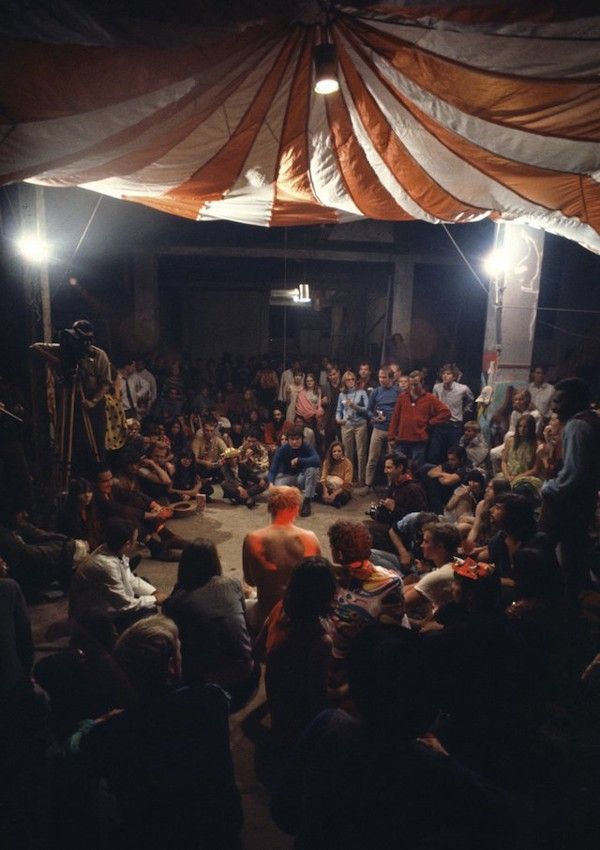
The Merry Pranksters didn’t just host gatherings, they engineered experiences. Acid Tests where
the Grateful Dead’s walls of sound became something mythological. Towers of speakers humming
before a note was even played. Feedback pending. It wasn’t clean. It wasn’t polished. It was rawvoltage and experimentation. A culture discovering that if you made it loud enough, immersive
enough, it could dissolve the boundary between performer and audience. Between self and other.
And then electronic music stepped forward and demanded something else entirely.
It needed precision. Control. Depth. Sub frequencies that traditional setups couldn’t handle.
Warehouses transformed into temples of low-end. Stacks of speakers configured with intent. The
culture shifted from band-centric stages to DJ booths framed by towers of sound. The system
became the instrument. The room became part of the composition.
Where the Merry Pranksters experimented with walls of sound, electronic culture refined it. Tuned
it. Perfected it. Bass calibrated to hit not just hard, but clean. To travel. To wrap around bodies
evenly. Festivals rising from empty fields with rigs so powerful they could make open air feel
enclosed. Intimate. Unified.
Each generation had its sound.
But each generation also had its system.
Because culture doesn’t just exist in ideology. It exists in infrastructure. In wattage. In the
willingness to move air differently than before.
It speaks for the society we live in. A final push beyond wood, strings, and the tangible. Moving
into the space age. Into the otherworldly. Into the seemingly unconceivable. Synths replacing
strings. A rhythm built not from hands alone but from machines, circuits, algorithms. We have
developed beyond the purely rational mind and stepped into an era of acceleration. The synthetic
sounds less like fantasy now and more like the soundtrack of everyday life. The future imagined in
the 80s is no longer fiction; it’s background noise.
We are the children. Perhaps the man-children, of a generation of wanderers and innovators. We
reap the rewards of their hard work and bathe in a comfort they could only imagine. Convenience
at our fingertips. Worlds in our pockets. And yet, beneath it all, the same need remains: to feel
something real.

We talk about DJs. About frontmen, icons and movements. But rarely about the ones who arrive
first and leave last.
The ones unloading cabinets in the cold. Running cables in the rain. Measuring distances.
Checking phase. Testing, adjusting, listening again. There’s a quiet devotion in that. A precision
that most will never notice. Unless it’s wrong, then its really wrong.
To build a space where hundreds or thousands of people can lose themselves safely inside sound
requires more than enthusiasm. It requires understanding frequency like a language. Knowing how
a room will respond. How walls will reflect. How bass will pool in corners if not guided properly.
It’s science, yes. But it’s also intuition. Experience. Care.
Because when it’s done right, nobody thinks about the speakers. They just feel.
They feel the drop land perfectly. The vocal sit exactly where it should. The silence before impact
stretching just long enough. The system disappears and only the experience remains. And maybe
that’s the highest form of craft. To build something powerful enough to transform a space, yet
subtle enough to let the music take all the credit.
Who knows where it will go next. Every era thinks it stands at the edge of something final, but
history suggests we are always mid-transition. Hard times feel close, as they often do. And hard
times only mean one thing. Innovation. Pressure creating diamonds in culture. It is in the fracture
that art becomes necessary. It is in uncertainty that music becomes more than sound.
Because in those times, it means the most. It carries our story deeper. It gives language to what
we cannot articulate. It allows us to think, to feel, and to be part of tomorrow instead of being
trapped inside a devastating moment. It reminds us that even when everything feels fractured,
there is still rhythm. There is still harmony waiting to be found.
And somewhere, in the electric air filled with charged vibrations, we breathe again.


Comments